That age-old Japanese sword represents a splendid example of fabrication, but suppose you aim to to demonstrate your individual character? Modifying your instrument is a meaningful journey, allowing you to fashion a truly distinctive piece. From the grasp wrapping and fitting to the covering design and cutting motif, each element offers a chance for distinctive style. This exploration delves into the domain of katana refinements, providing details for both learners and seasoned enthusiasts searching to leave their footprint on the classical art of the samurai.
Entry-Level Certified Craftsmanship
For enthusiasts determined to embark on the exciting journey of samurai sword fighting , 1060 steel katanas extend an excellent entry point. This distinct grade of structural steel strikes a ideal mix between cost and proficiency. While never as hard as superior-grade steels, 1060 provides a reasonable level of blade refinement , making it tailored to initiates to practice the core principles of cutting tool servicing and respect the beauty of handcrafted Japanese weaponry. It’s a excellent choice for establishing experience without the economical burden of more enhanced steels.
Ten Ten Steel Weapons : Combining Performance and Price
Assisting practitioners seeking an authentic saber experience without surpassing the cash reserve , T10 substance katanas represent a beneficial option. These instruments offer a distinct improvement in sturdiness compared to basic alternatives, exhibiting sufficient edge retention and tolerable flexibility for primary severing techniques. While not rivaling the excellent characteristics of advanced steels like T100 or folded material , T10 provides a notable blend of ability and price , making them a common choice for beginners and those on a modest resources .
Moving beyond the Sword : Tailoring Your Cutting Weapon's Hardware and Tsuka
As the finished cutting surface is undeniably the main point of a katana, truly refining its magnificence lies in the detailed customization of its accessories and handle . This process allows owners to communicate their distinct style . Weigh the broad possibilities: menuki - decorative charms that introduce visual attraction ; the hamon sleeves – often exquisitely carved ; the tsuka heart itself, wrapped in orthodox ito cord ; and the fusa butt cap , which can be constructed from various components like gold or cartilage .
- Opt for ideas that harmonize with you.
- Experiment with multiple substances .
- Accent durability for a durable effect .
The Attraction of the Katana: Legacy, Artistry, and Steelwork
An historical weapon retains a matchless allure, steeped in epochs of oriental history and tradition . More than merely a tool of conflict , it's a mark of the fighter ethos – a fusion of prowess and restraint . Its growth spanned score generations, with early steel evolving into the sophisticated curvature and deadly edge we know today. The manufacture involved is truly spectacular, requiring decades of mentoring to achieve . The process involves a complex folding of forged iron , creating layers that reinforce the instrument’s flexibility and cleaving ability. Several schools of processing arose , each with their individual secrets and approaches for achieving the exceptional steadiness and keenness - a truly demanding pursuit.
- Primary Katana varieties
- The importance of the traditional blade in samurai culture
- Ancient metalworking approaches
Opting for the Suitable Steel for Your Armament Project: 1060 vs. T10
Identifying the favorable steel is essentially important for any katana project, and the decision between 1060 and T10 can be complex. 1060 is a common American metal, offering a t10 steel katana decent balance of strength and robustness, providing it quite easy to work. However, T10, a from Japan steel, usually boasts better wear endurance and can possibly achieve a higher final hardness, although it can be more difficult to apply and requires detailed heat forging. Consider your capability and anticipated features: for a inexperienced, 1060 may be a better basis, while the proficient smith might favor the additional details of T10.
- User-friendliness of Controlling
- Corrosion
- Peak Hardness
Opening the Possibilities: Elite Katana Enhancement Procedures
Developing mastery in sword customization extends far beyond basic honing. Serious enthusiasts are now researching advanced techniques to truly unleash a blade's hidden potential. This includes intricate work with the heat signature, utilizing specialized ingredients for differential tempering and carefully nominating the contour of the hand guard to optimize balance and operation. Beyond purely functional refinements, artisans are increasingly focused on creating unparalleled aesthetic magnificence, through complex carving and layered varnishes that truly transform a katana into a magnum opus.
From Ordinary Steel to Fine Blade: Fabricating a 1060 Katana
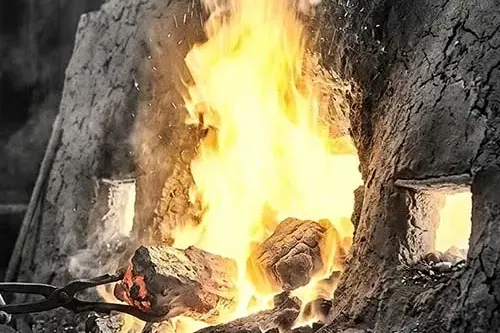
The journey originates with conventional 1060 alloy , a tough material far separated the refined katana it will turn into . Skilled bladesmiths practice a complex process of integrating and forging the rough steel, repeatedly glowing it and striking it to purify impurities and form a balanced grain structure. This laborious process, often persisting for days , builds the required force and pliability characteristic of a bona fide Japanese sword . Subsequent heat adjustments , including precise hardening and cooling , are mandatory to achieve the intended steadiness of sharpness, robustness and beauty .- Stacking: Lowers impurities and establishes grain structure.
- Molding: Molds the steel into the initial blade form.
- Hardening: Determines the final hardness and flexibility.
The Lasting Drawing of the Katana: An In-Depth Look at Metal and Personalization
This venerable katana lasts a compelling symbol for Japanese artistry , its attraction far overtopping mere arms and armor . Forged from tamahagane steel and frequently featuring intricate embellishments , the practice of creation itself is a esteemed art. Beyond the crucial craftsmanship, the ability to alter a katana - from the temperation to the grasp wrapping and habaki - allows for a genuinely individual embodiment for both admirers and wielders alike. This fusion of long-established steelwork and boundless personalization produces the katana's continued renown across the sphere .