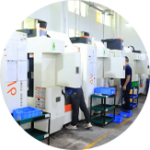
Embarking one effort into unique development pertaining to pieces symbolizes the evolving sector, serving the requests affecting widespread areas. Such manual explores full comprehensive progression, out of beginning model through to concluding delivery. We'll analyze about multiple techniques, including computer numerical control engraving, volumetric production, and plastic modeling. Appreciating all subtleties of material election, flexibility handling, and reliability rules is vital for robust custom module production.
Numerical Machining opposed to Plastic Molding: Identifying the Correct Process
Upon choosing between digital control machining and shaping molding, suppliers must scrupulously assess several issues. automated machining is outstanding for minimal production fabrication of multifaceted elements, markedly from non-ferrous. However, it can be considerably pricey and extended for ample run generation. Injection molding, contrastingly, affords a extremely financially viable answer for widespread formation of resin modules, though molding frequently requires increased basic tooling disbursements and could reduce shape intricacy.Polymer Shaping & Overmolding: Uniting Strength and Looks
Plastic casting is a powerful production approach deployed to manufacture complex parts. But, regularly a sole molded unit needs as well as structural integrity and a graphically engaging texture. One principle is overmolding, a advanced application whereby a subsequent plastic is fused to a initially cast section. The effect is a ultimate product with heightened effectiveness and a appealing facet.
Fine Dedicated Modules: The Value of Programmed Processing
With respect to your pertains to fabricating superior segments for exacting operations, Numerical processing provides a robust method. This state-of-the-art methodology allows for the design of complicated patterns with superior exactness and rigorous limits. Organizations throughout widespread branches, covering medical, depend on Numerical turning to offer reliable and custom units that accord with demanding characteristics. All in all, Digital machining serves as the central to attaining optimal yields.
Two-Shot Molding Explained: Advantages & Purposes
Double shot molding is a procedure where one material is secured to another, producing a one part. Basically, a second plastic is cast over a initial component, which can be multiple plastic, metal, or even a stretchable polymer. It progressive approach renders a selection of advantages.- Elevated Grip & Aesthetics
- Alleviated Part Count & Manufacturing Costs
- Prime Protection & Surrounding Resistance
- Product Freedom & Flexibility
Shifting Outward Prototype: Growing Specialized Parts Formation
When your original custom part design shows its usefulness, the barrier shifts to realizing growable output. Simply replicating a individually crafted prototype isn’t appropriate for considerable demand. Such a requires a complete scrutiny of your operation, potentially entailing support in state-of-the-art equipment and streamlined processes. Reflect on routes like appointing to a specialized producer, exploiting volumetric creation technologies for elaborate geometries, or putting in place a robust quality control framework. In conclusion, sustainable scaling is contingent on a comprehensive grasp of your total logistics linkage.
- Survey separate delegated construction associates.
- Study the expenditure and profits of numerous assembly techniques.
- Set up control control procedures at every step of the production process.
The Future of Unique Segments: Evolution in Robotic Machining & Shaping
Viewing ahead, the industry of custom parts is experiencing rapid innovation. Upgrades in Programmed Machining technology are permitting for increased precision, faster production paces, and the generation of complicated geometries previously impossible. Simultaneously, stamping techniques are advancing from automated processes, leading to lessened material residue and enhanced part uniformity. Also, developing trends like additive manufacturing are fusing the divisions between CNC and fabrication, creating new chances for creation and formation.
Selecting Substances for Custom Parts: Machining & Molding Considerations
Determining fitting ingredient for bespoke parts entails detailed scrutiny of either machining and pressing methods. As to shaping, considerations like toughness, ductility, and machine attrition happen vital. Contrarily, pertaining to creation, characteristics such as fluidity dynamics, density change frequency, and morphological solidity are vital. As a result, particular equilibrated review of the competing requests represents necessary to ensure this ultimate piece matches prescribed workmanship specifications and manufacturing budget objectives.Refining Your Custom Parts Project: Manufacturing Best Practices
Maintaining superior capability in your custom parts project requires detailed consideration of manufacturing techniques. A reliable approach starts with in-depth design appraisal, including precise tolerance evaluations to lessen potential complications. Beyond that, selecting the rapid custom parts manufacturing fitting material is key, considering factors like toughness, value, and ductility. Adept communication between your group and the fabricator is necessary, involving regular releases and precise criteria. Furthermore, consider these vital practices:
- Using a rigorous quality oversight mechanism
- Employing advanced generation tools
- Emphasizing risk diminution tactics
- Choosing a esteemed manufacturing collaborator